Showing posts with label German Research. Show all posts

Saturday, February 1, 2020

San Diego Genealogical Society Presents Warren Bittner

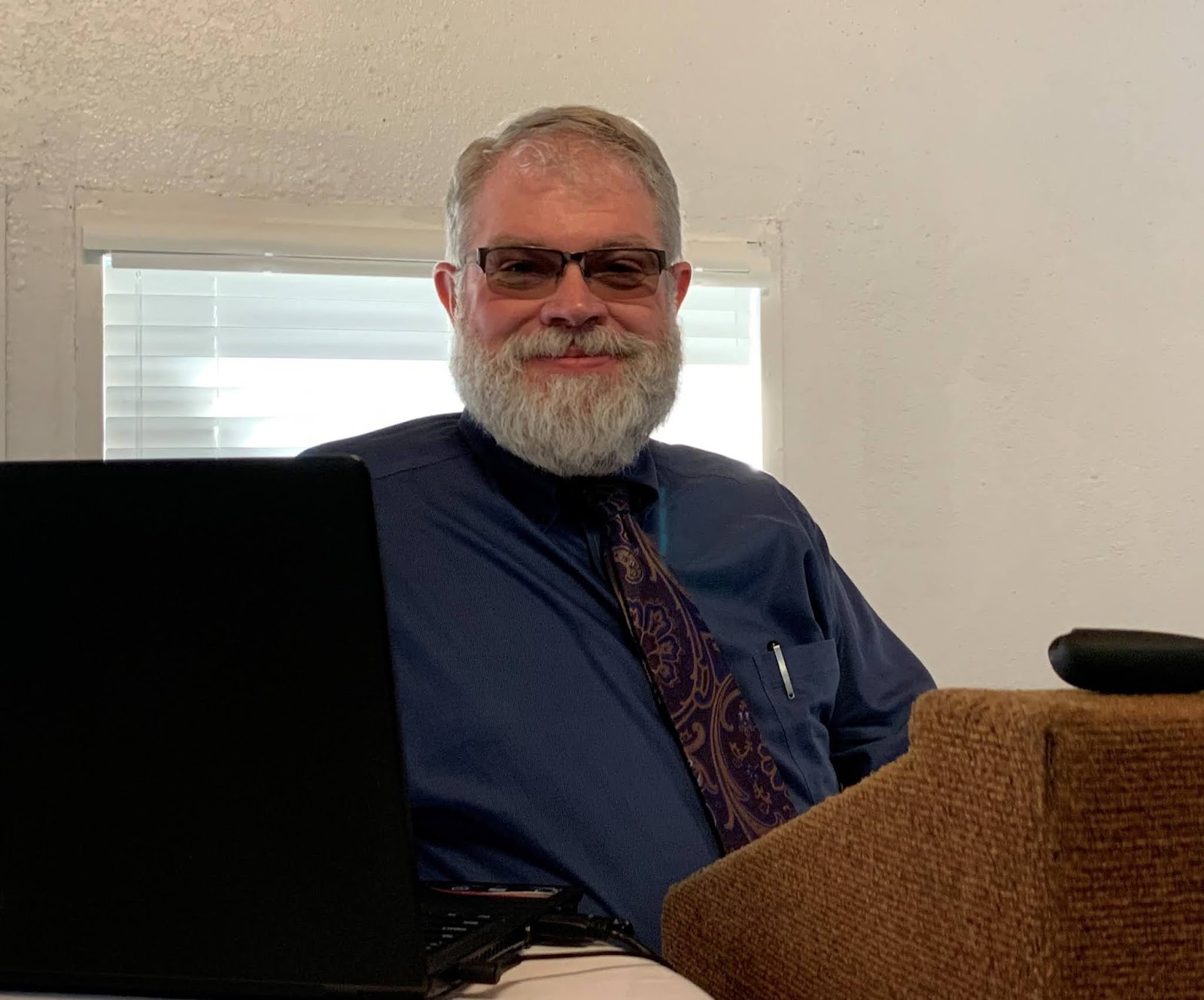
Warren Bittner

On Saturday, January 18th, the San Diego Genealogical Society held it’s Annual Meeting at Marina Village with Warren Bittner as the guest Speaker. F. Warren Bittner is well-known genealogical researcher and lecturer. I have had the privilege of listening to Warren speak on several occasions and find him to be very knowledgeable and entertaining. Each time I learn valuable new information for researching my ancestors.

The first session was entitled Meyer’s Gazetteer: Gateway to Germany.
Meyer’s Gazetteer has the most complete list of German towns anywhere from 1910 and that the FamilySearch Catalog is based on Meyer’s Gazetteer. Warren started out explaining the six levels of jurisdictions in Germany and then explained how to decipher the listings (names of areas, religions, courts, services, etc.) you would encounter when looking at a particular locality. There is a tremendous amount of information contained in the listing for a particular site. Warren also told us about an amazing new website called Search the Meyers Gazetteer that allows us to search Meyer’s Gazetteer and helps us in deciphering the information we find. So many States and Abbreviations to learn. Trying to read the original Meyers Fraktur font


can be very difficult, so, this website will be a tremendous help. While I have German ancestry I still have been unable to locate a region or town they have come from. As soon as I can find an area within Germany I will be heading straight to Meyer’s Gazette.

The second session was entitled German Maps and Territories.
In us beginning to understand Maps of Germany Warren first talked about how Germany’s boundaries have changed over time. Today there are 16 ‘states’ in Germany. He visually showed us these changes using an animated map that he found on YouTube. I found one such map on YouTube at https://www.youtube.com/watch?v=UY9P0QSxlnI which not only showed boundary changes over the years but also population growth. As Warren pointed out you need to know where your ancestor lived at the particular time period so you will know where to start looking for records. Villages could be under one area in one time period and not with that area at another time period. The following is an example of Europe in 1831 when my ancestor Theodore King is believed to have come to America.


(click on images to enlarge)

The third session was entitled German Marriage Laws and Customs.
Warren started out this session by explaining that “German peasants never enjoyed freedom of choice in marriage decisions.” He used pictures to help explain many of the marriage customs of the German people. Some customs depended on the region you lived in. It was also interesting to learn how many influences controlled who you could marry from the Noblemen, the Church, the Town/Village, not to mention the parents. Warren also talked about the types of marriage records you are likely to find and where you might go to search for those church and civil marriage records.

Warren’s fourth session was entitled The Fisherman Who Wanted to Mary the Executioner’s Daughter: Stories You Missed for German Marriage Resources.
In this final session Warren started off by telling us the story of the Fisherman who wanted to marry the Executioner’s daughter. This story helped us learn about the many groups that could influence who people could marry and the reasons they influenced these decisions. As Warren demonstrated and explained, using actual family research, he has been successful using a wide variety of sources beyond Civil and Church records for information. I was truly amazed at where and how he was able to find information about his ancestors.

I will definitely use the information that Warren presented when doing my own research on my German ancestors. When I hear about many of the customs and learn of the life that my peasant ancestors might have led in Germany I can understand why they may have decided to leave for the promise of a better life in America.

If you have any corrections or additions or stories to share I look forward to hearing them.
Enjoy the journey,
Debby


Sunday, March 10, 2019

The Lives Our German Ancestors Lived

Have you ever wondered about the lives your ancestors lived? The day to day lives they had? Vital records tell a piece of the story but it doesn’t tell me what they did on a daily basis or what might have led them to the decision to leave their country of birth and travel thousands of miles to start a new life in a new country with a new language.

Saturday, at the monthly meeting of the San Diego Genealogical Society, there was a very interesting guest presenter that helped me learn more about what life may have been like for my paternal 3x great-grandfather Theodore King in Germany.

Ingeborg Carpenter is German born and immigrated to the United States in 1972. Ingeborg is an expert in reading the old German script, and is a translator of German and English. She teaches the reading and writing of the old handwriting, and German history for genealogists.

Ingeborg was a very engaging and interesting speaker with many visuals to help us understand the lives our German ancestors led. I took note after note and could have listened to her for hours. I just wanted more and more information. I wanted to share some of the many things I learned during her 2 presentations.

Ingeborg’s first presentation was entitled: You Know Where and You Know When, I’ll Let You Know How They Lived.
  • “It is vitally important to become familiar with German history, especially how that history affected the many border changes.”
  • The 'Kaiserreich' or 2nd German Empire was from 1871-1918. ‘Germany’ will celebrate it’s 70th birthday this year.
  • In Germany there was ‘real inheritance’ where property was equally divided for inheritance. Once large farms became smaller and smaller over the generations.
  • There are many words for ‘farmer’ depending on the farmer’s status, farm job done, etc. ‘colon’ was a rich farmer, ‘heuerling’ was a tenant farmer, ‘hausling’ was a day laborer, etc.
  • ‘Hallenhaus’ was a type of ‘hall house’ that contained what you would think of as a barn (with stables for animals, storage, a thrashing floor) and a home for the farmer, his family and workers all under one roof. The main door was large enough for a wagon to pass through. The home section had an open kitchen with a fire for cooking. The family ate around the fire and slept in sleeping small enclosed chamber areas. The sleeping quarters for the maids and the farm workers were closer to the animals. Hard to imagine all this going on under one roof but in the middle of winter you didn’t need to worry about going outside to tend the animals I guess.
  • The farmer, family and workers had a typical day that began about 4 am. Breakfast might consist of pumpernickel bread soaked in milk, a type of stew for lunch and dinner about 6 pm that might have been a type of pancake. The type of pumpernickel bread was made in huge square loaves that took over a day to bake and could last for at least a year.
  • Work on the farm was done by everyone. Children tended animals and did other odd jobs. Women worked in the fields, cooked, carried water for animals. Men tended the animals, grew the crops, made repairs to farm implements, etc. Everyone knitted and made woolen socks/stockings, etc. 
  • New ‘wooden’ shoes were usually just a once a year event.
Ingeborg’s second presentation was entitled: Superstitions and Beliefs that Guided Our German Ancestor.
  • Many early beliefs were based on Norse Mythology. When Christianity came along some of the old Norse beliefs became intermingled with the newer Christian beliefs.
  • ‘Wells’ were sacred and needed to be covered and blocked during eclipses and during 12th night. Salt was added to wells at times to ward off witches. Money in a well was a sign of good luck.
  • 12th night is the from 12/25-1/5 and on the old calendar was during the winter solstice. New Year’s Eve was a very precarious night and the house and barn needed to be protected from spirits. On January 5th they would smoke out the spirits with herbs to ward off bad spirits and cleanse the remnants of Winter out.
  • The Eve of May 1st bad spirits are out. A thorn is placed in the door frame, wells must be covered and a cross placed on the door to ward off the bad spirits and be sure to leave out some bread with honey on it.
  • May 1st is May Day. A day to wash your face and you might catch a glimpse of elves.
  • House spirits’, thought to be the spirit of an ancestor of the home, will protect and tease the inhabitants so people will leave something out for them at night.
  • Herbs are more potent if gathered and blessed on St. John’s Day (July 24th)
  • February 2nd is Candle Mass day when the candle wax is blessed.
  • Storks are a sign of good fortune and bring happiness.
There were so many superstitions. Hopefully, I recounted these correctly. You can see many remnants of these still practiced today all over the world.

Both of these talks helped me take a glimpse in to the lives of my German ancestors. I think I can understand a little more about the lives they left to come to America. I wondered if Theodore was one of many children and just wanted to try something other than farming? Would the farm he inherited, if there was one, have been so small he didn’t see how to make a living? Was his father a craftsman and he wasn’t sure what he wanted to do? I wonder.

Note: Ingeborg will be the Key Note Speaker for the 2019 International German Genealogy Conference to be held June 15-17 in Sacramento, CA. I am definitely looking forward to hearing her speak and learning more about German Research.


If you have any corrections, additions or stories to share I look forward to hearing them.
Enjoy the journey,
Debby