Showing posts with label Remsen. Show all posts

Sunday, December 8, 2024

The Birth of Jacob Hamman


When doing genealogy on our immigrant ancestors we are always advised to gather all the information possible before we start looking for information in the country that ancestor came from.

Over the years I have gathered information on my maternal 2nd great grandfather Jacob Hamman in the United States.  I possibly have Jacob on a passenger list, I know when he filed his immigration paperwork, when he obtained his US Citizenship, when he purchased land and when he died.

There are still questions to be answered but I always wondered about his life in the Grand Duchy of Luxembourg prior to his immigration to the United States in the late 1850s.  Who were Jacob’s parents and siblings?  Where exactly was he born in Luxembourg and when?

The information have I been able to gather about Jacob’s birth, parents and siblings:

  • According to the 1880 US Census for Jacob in Iowa he was 40 years old and born about 1840 in Luxembourg.
  • According to the 1900 US Census for Jacob in Iowa he was 60 years old and his birth date was July 1839 in Luxembourg.
  • According to Jacob’s obituary in 1900 he “was 64 years old and born at Hesper, Grandduchy, Luxembourg on the 25th day of August 1836”.
  • According to Jacob’s Iowa death record he was born in Luxembourg about 1835.
  • According to Jacob’s tombstone his birth is listed as 1830 and at his death in 1900 he was 70 years old.

Based on this information I can narrow down Jacob’s birth from 1835 to 1840.  That is definitely a discrepancy.  Is the birth date and location reported in his obituary, correct?  Can I locate a birth certificate in Luxembourg?  Will this tell me his parents’ names?  Is it possible to determine his siblings?  Did any of them also immigrate to the United States?

Reminder:  just because a record isn’t in an online database you are searching today it doesn’t mean it won’t be there tomorrow or ...years from now.  Keep searching!!

Fast forward many years of searching and I happened to find the following record on FamilySearch:


Wow!  Major Happy Dance!!  I think that is my ancestor and WOW there are his parents’ names.  I begin to search under their names and believe I have found Jacob’s siblings.  Major excitement!

After justifiably being excited about finally finding what I think is my ancestor’s birth record and other family records including Jakob’s parents’ names I realize that the index has only basic information and I don’t know about you but…this is never enough for me.  I can see the actual ledger in the photo but I want to know more of the information that is there but …I don’t read or write German.  UGH!  What do I do next? 


I need someone to translate these for me and I’m up to about 25 records now.  Where to go?  I could post this on a genealogy site or try to find someone who speaks German.  An idea starts to develop.  These are records from Luxembourg.  Several years ago I joined and visited the Luxembourg American Cultural Society and Center in Belgium, Wisconsin.  I wonder if they’d have any suggestions? 

How exciting it was to learn that yes, they could definitely help me.  They actually contract with someone in Luxembourg and they informed me of the fee for services.  All the records were emailed to LAC and then all I had to do was, not so patiently, wait for a reply.  At last, this was the reply for Jacob’s birth record:

Translation:

In the year 1840, on July 28, at 7 a.m. before us Mayor, registrar of the civil status records of the municipality of Hesperange, canton of Luxembourg, in the Grand Duchy of Luxembourg, has appeared Jakob Hamman, aged 37 years, road maintenance supervisor, residing in this municipality, who presented us a child of male sex, born on the 27th of this [month], at 11 a.m. of him deponent and his wife Barbara Clement, both residing in Hesperange, and whom he declared to give the first name of Jakob.

Which declaration and presentation took place in the presence of Nikolas Zahlen, aged 45 years, farmer, and of Johann (=John) Didesch, aged 64 years, day laborer, who are residing in this municipality, and they have all signed this present birth record, after having previously been given lecture thereof.

[signatures]

Wow! WOW!! 

From the translation I now know that:

  • Jakob was born on 27 July 1840 at 11 am.
  • His parents were Jakob Hamman (37 years old and a road main supervisor) and Barbara Clement.
  • They lived in Hesperange.
  • Witnesses were Nikolas Zahlen (45 year old farmer) and Johann Didesch (64 year old day laborer) who lived in the Hesperange.

Interesting that the 1880 US Census was the only record with his correct year of birth.  The obituary showed his birth date but was several days, a month and four years off.  I’m sure birthdays were not remembered and celebrated the way we do today. There were language and cultural differences and so many adjustments when traveling and becoming established in the United States that I’m sure your actual date of birth was just not that important.  Reminder: know that dates may be off by months, days or years as you are researching.

The amazing translator I had even provided the following additional information:

The spelling of the name is nowadays Hammang. On the Hammang family and descendance, see: Prosper Kayser & Paul Vanolst: Familienchronik der Gemeinde Hesperingen. Um 1650-1923. Publ. 2018 pp. 169-170.

Someone who spoke German could have translated the document but this additional information is extremely valuable for further research.

Being connected to Historical Societies from locations your ancestors lived or to Cultural Societies whose goals are to help preserve the cultures of the countries your ancestors immigrated from are very valuable sources of information.  I would definitely recommend LAC if you have ancestors from Luxembourg to provide another level of support as you research your ancestors.

If you have any corrections or additions or stories to share, I look forward to hearing them.

Enjoy the journey,

Debby


The following posts help tell the story of Jacob's life: Jacob Hamman's Land Deed, Sunday Obituary-Jacob Hamman, My First Naturalization Papers-Jacob Hamman, Searching for the Will and the Land of Jacob Hamman, Finding Jacob Hamman's Land-First Understanding Iowa Land.


Monday, January 24, 2022

The Luxembourger Statue

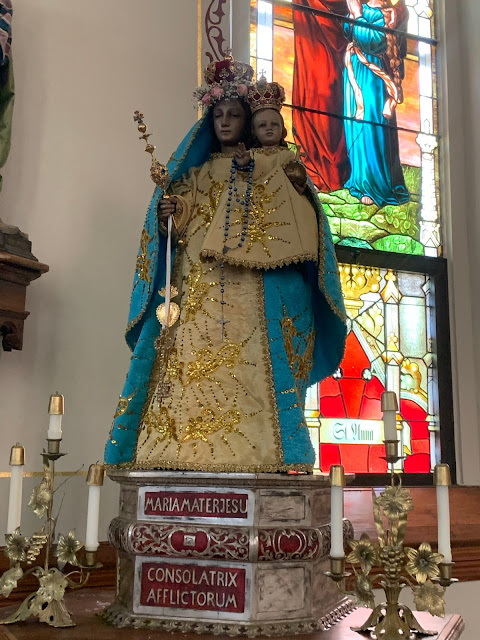
"Mary Mother of Jesus.  Consoler of the Afflicted." 
statue St. Mary's, Remsen, Iowa.

My adventure at St. Mary’s (A Church, Bells, a Statue and an Amazing Adventure)  church was not quite over.  There was definitely more to this adventure and more to learn.

Later, that day I went back and reread Father Petty’s sermon and realized the ‘Luxembourger window’ was in the Basilica St. Francis Xavier, in Dyersville, Iowa (oops) and that the ‘Luxembourger statue’ was what was at St. Mary’s in Remsen, Iowa.  Oh, dear, I should have done a better job preparing for this. 

The ‘Luxembourger statue’ is of Our Lady of Consolation, the Patroness of Luxembourg.  From Father Petty’s sermon I learned, “ The original [statue] is a 16th Century dressed statue of Mary and the Child Jesus, kept in the Cathedral of Luxembourg.  There are statues of this Madonna in St. Donatus, Sacred Heart in Dubuque, and at St. Mary’s in Remsen: three Iowa parishes where many Luxembourgers settled.  Here is Dyersville we have a stained glass window of the statue attesting to the presence of a group of Luxembourgers here in the parish when this church was built.  The Latin: Maria Mater Jesu; Consolatrix Afflictorum “Mary Mother of Jesus.  Consoler of the Afflicted.”  

Searching through my pictures of the Basilica from 2020 showed no pictures of the individual windows.  I had planned on going east to Dyersville anyway to visit the Dyersville Historical Society, so, I guess a return trip to the Basilica was now also on the agenda.

The next day I went back to the Basilica of St. Francis Xavier in Dyersville and found the ‘Luxembourger window’ :


There it was, on the right side of the window..."Mary Mother of Jesus.  Consoler of the Afflicted."

On the left side of the Luxembourger window is the depiction of  the female saint Kunegunda.  On the bottom of the window in German are:

Stating that the window was donated by the Luxembourg members of the parish who had immigrated from the Grand Duchy of Luxembourg.

Later that day after visiting the Dyersville Historical Society I learned that one of the first settlements of Luxembourg immigrants in the area was at a town called St. Donatus and that there’s still an old church there by the same name.  As I headed south to my stop for the night I decided to try and find the church. Luckily, I found St. Donatus and it was open. 


 No one was around but this is what I found inside:

Mary, Consoler of the Afflicted

I fully believe it was the ‘Luxembourger statue’ I was meant to find and learn about.  Now I can see the pattern and the importance of the ‘Luxembourger statue’ in the lives of the early settlers and their strong connection to their homeland.  Perhaps, one day, I will make it back to Luxembourg and I can see the statue in the Notre-Dame Cathedral in Luxembourg City.  At the end of the 18th century Lady Comforter of the Afflicted was adopted as the patron saint of Luxembourg City and the country Luxembourg.  

What an amazing find in learning more about my ancestors!  Remember, the research is about more than just the vital records.  Always be open to those amazing, spur of the moment, adventures.

Moral of the story-I should do a better job next time of reviewing my information.  Hmm… but would I have had such an amazing adventure in the steeple of St. Mary’s and learning about the ‘Luxembourger statue’ if I’d done that?? 

If you have any corrections or additions or stories to share, I look forward to hearing them.

Enjoy the journey,

Debby


Wednesday, January 19, 2022

A Church, Bells, a Statue and an Amazing Adventure

 Sometimes when you make a mistake it can lead to a great adventure.  Such was the case when I returned to Remsen, Iowa in 2021.

In 2020 I traveled and visited St. Mary’s church in Remsen, Iowa and the Basilica of St.Francis Xavier in Dyersville, Iowa. (See previous posts).  I knew that my maternal great grandparents John & Marie Bentz and Jacob & Katie Hamman had immigrated from Luxembourg, settled first in eastern Iowa and then made their way to Remsen, Plymouth County in western Iowa.  I was so grateful that I was able to visit the churches they were involved with.

Due to Covid many research facilities were closed to the public.  I was not able to visit the DyersvilleHistorical Society while I was there but I did leave a message on the phone. Later we talked and a researcher from the Society sent me a copy of a sermon one of the priests had written that talked about the Luxembourg connection that she thought I’d enjoy reading.  From Father Petty’s sermon I learned a little more about St. Mary’s, the Basilica and the Luxembourg stained glass window.  How interesting.  I looked back through my 2020 pictures of St. Mary’s and did not find one.  Bummer!  Guess this means I MUST go back.  It sure would be interesting to know which window it was and have a picture of it to better understand the connection of the people of the parish to their motherland of Luxembourg.

When I made it this spring to LeMars, Iowa I called the church office to ask if the church would be open on Saturday when I would be in town.  Well, there was going to be a wedding that day …so, no, I couldn’t go in…but I’m only there for a few days and drove from California, etc. etc…but after some checking they said if I was there at 9 am on Saturday I would be able to go in.  (If they’d said 6 am you can believe I would have been there!)  I asked specifically about the Luxembourg window and was told there was information in the back of the church that talked about the windows.

click on images to enlarge

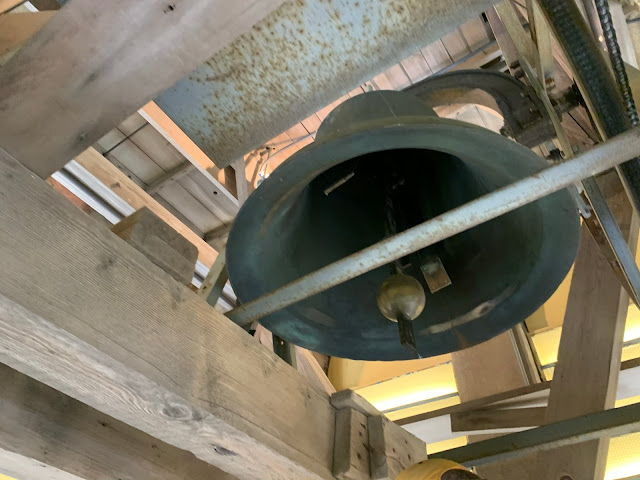
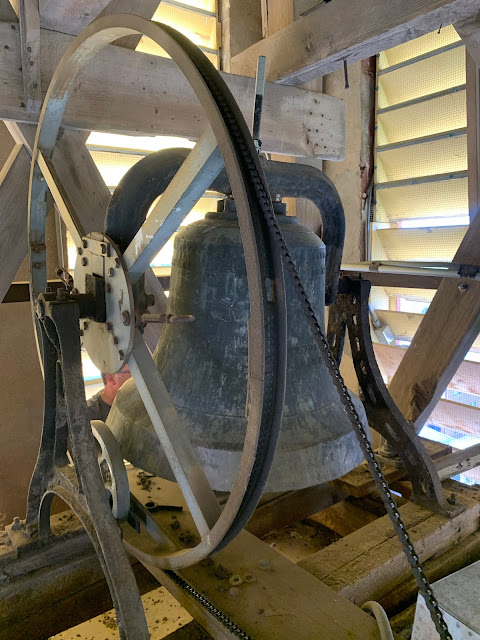
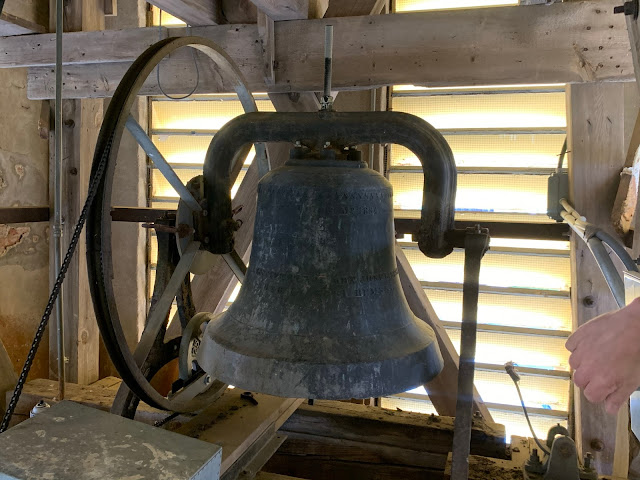
I was there at the appointed time and parked out in front of the church.  The information in the rear of the church had to do only with donations to restore the windows, so, I walked around the church and began taking pictures of all the stained glass windows.  I caught the attention of a gentleman walking through the rear of the church and asked if he was a member of the Parish, and asked "Gee, do you know which of the stained glass windows is the Luxembourg window?"  He hesitantly replied, “well no” and explained that he and another gentlemen where just there to service the bells and quickly asked if I wanted I could go up and see the bells?  I gladly accepted.  This may not have anything to do directly with my ancestors but shouldn’t we always be open to new experiences?  And what an exciting adventure it was!

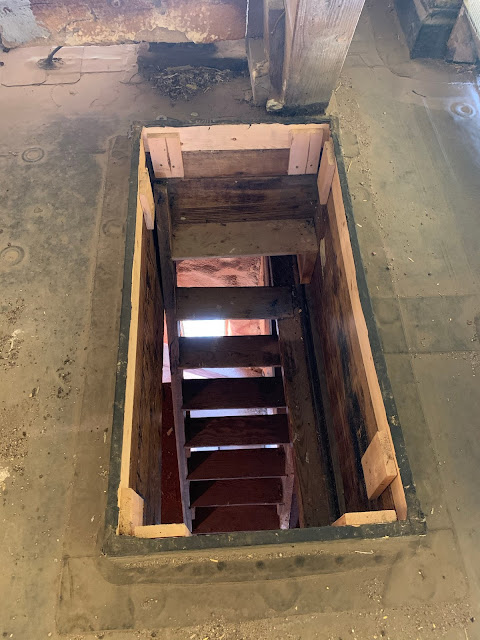
Up we went.  First we climbed on several levels of regular stairs and then up straight wooden ladders and through trap doors.  I was able to see where the original ropes had gone through the levels of flooring to ring the bells that are all now automated.  Wow, we made it up to the bells. 


1884 stamped on the bells

While the church may have been rebuilt I am guessing these were the original bells that hung in the church when my ancestors, three generations of them, attended this church.  What an amazing piece of history this was!  The men did their servicing of the bells and I was ready to descend when they said, “ But don’t you want to go up a few more levels to the highest point and look out the clock faces?”  Well, sure, I’ve come this far why not go up and look out?  Wouldn’t you?

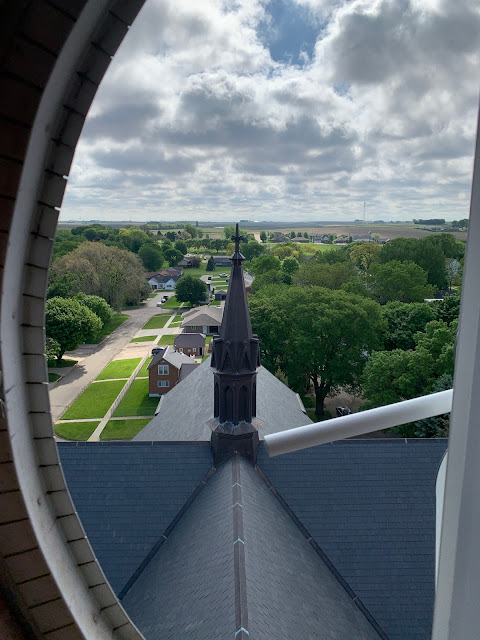
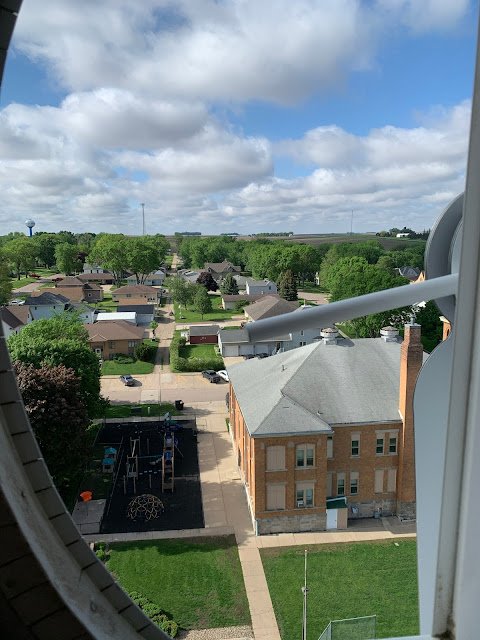
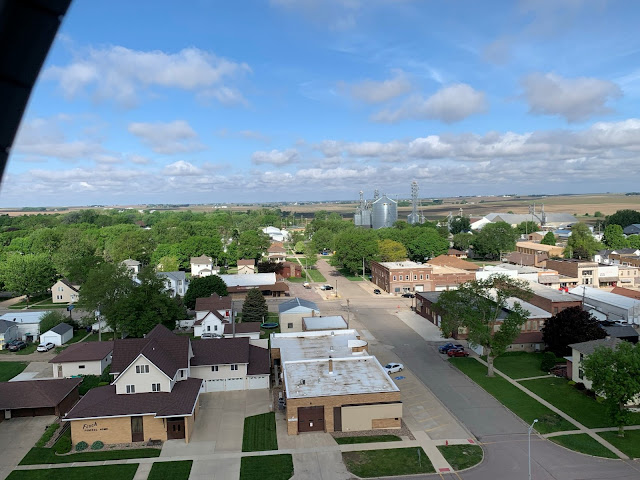
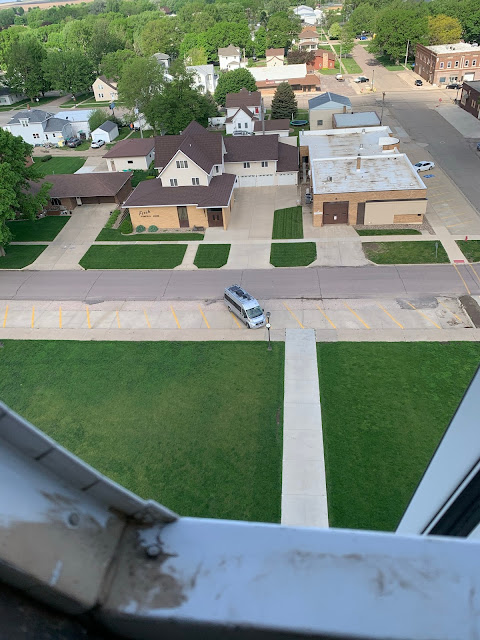
Looking out the four windows-


I know Jacob owned land out in one direction.  Last year I had gone and found his farm land.  Now I was looking out from the clock and seeing it from a different vantage point.  I knew where the wives (Katie and Mary) had lived, the next block over from the church, and looked in that direction also.  What amazing views!  What an amazing vantage point to see the area where my great great grandparents and great grandparents and my grandfather had lived!  Looking down at my camper showed how high I was.

Now it was time to descend.  Down the narrow stairway, 


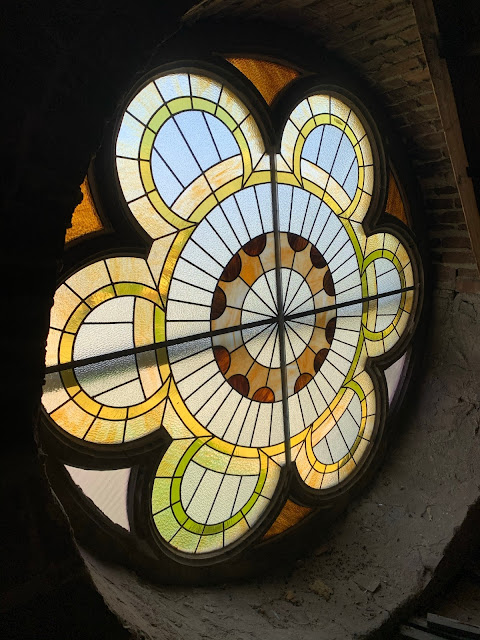
down the horizontal ladder missing the rung, past a beautiful window,

down, down.  That process seemed a little slower but we all made it safely. How many people can say they have been up in the church tower and seen the bells that were there when their ancestors were there well over 100 years ago?  Pretty amazing and an adventure that wouldn’t have happened if I hadn’t been there at that particular time and hadn’t reached out to ask for help.  I am so grateful for this opportunity!  Always be open to those new experiences, things that perhaps were not on your agenda but are just as wonderful to discover.

One of the men had called the Deacon of the church while we were climbing and asked him about the Luxembourg window for me.  Turns out there wasn’t a window at St. Mary’s but something else that came from Luxembourg- the ‘Luxembourg statue’:


Not what I was looking for but so very beautiful!  At least I found something that connected the immigrants from Luxembourg to their homeland.  What is this statue all about and why was I so wrong about the window being there?

Later, I went back and reread Father Petty’s sermon and realized ...

(to be continued)


If you have any corrections or additions or stories to share, I look forward to hearing them.

Enjoy the journey,

Debby


Saturday, January 8, 2022

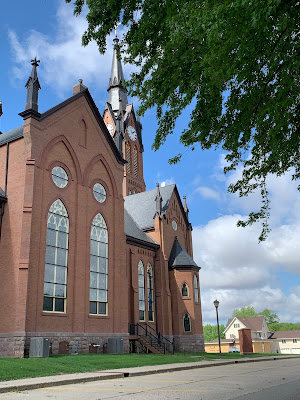
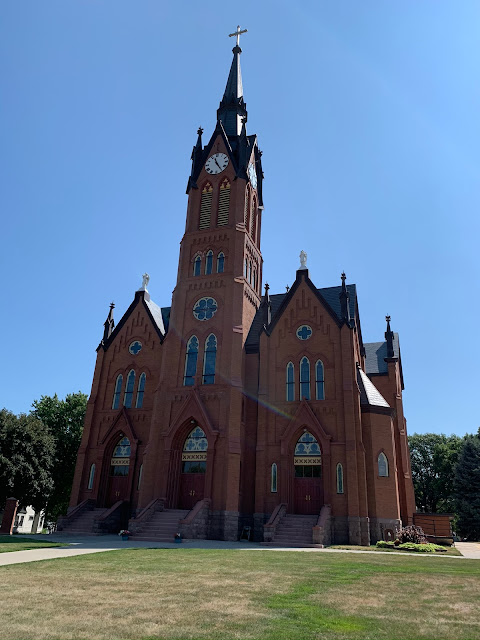
St Mary’s Roman Catholic Church Remsen, Iowa

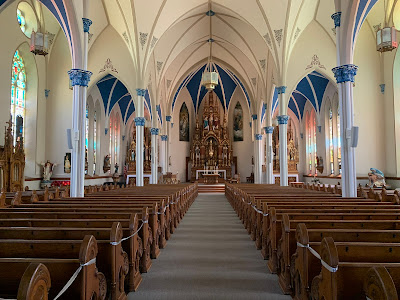
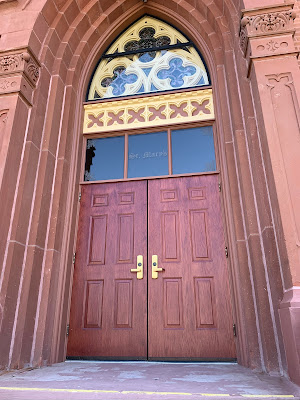
When I walk in my ancestors’ shoes, visiting the places they have been, I feel closer to them. Since I am unable to see or talk to them, this is a way for me to see the area they lived or worked or where they attended church. This was my experience in the summer of 2020 when I took a trip to Remsen, Plymouth County, Iowa to see where my maternal grandfather, James Jacob Hammond, was baptized and where his parents Henry Hamman and Susan “Suza” Bentz Hamman were married, lived and died. Both Henry and Suza’s parents (Jacob & Catherine Hein Hamman and John & Mary Robin Bentz) had immigrated to this area from Luxembourg. Both of these families, I had learned, were Roman Catholic and attended the same church, St. Mary’s, in Remsen.


  • St. Mary’s first structure was completed in 1884. St. Mary’s was a parish of immigrants from Luxembourg, Germany and Alsace. The original structure was destroyed by a tornado 13 June 1885. A second wooden structure was completed in 1885. The third structure, a neo-Gothic design, was begun in 1902 and the cornerstone was laid on 21 April 1903. My maternal grandfather was born in 1904.

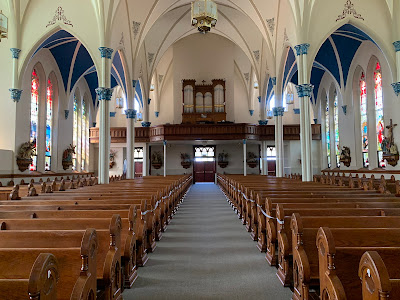
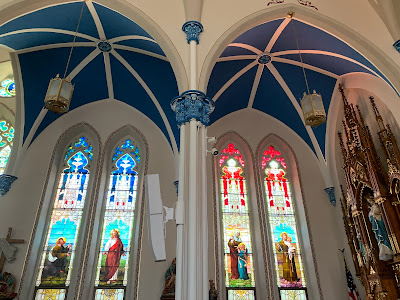
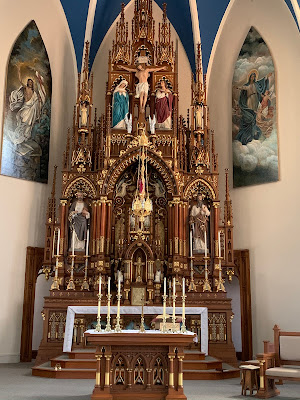
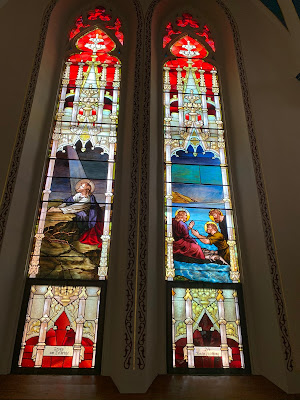
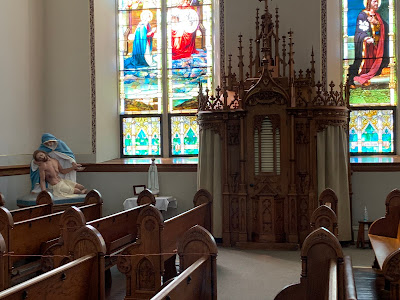
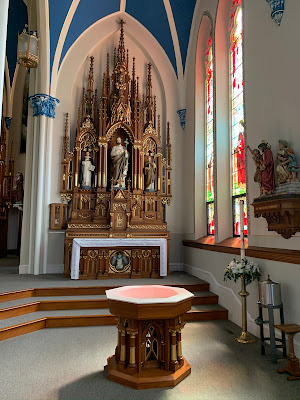
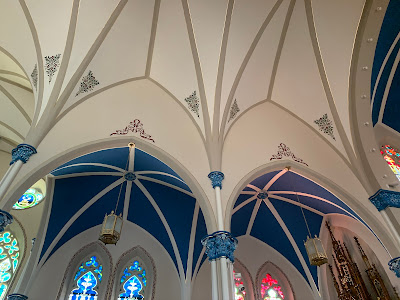
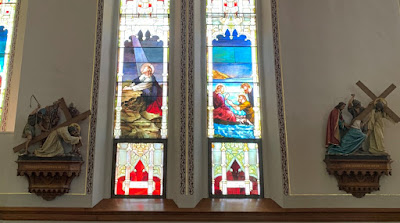
In August 2020, despite Covid, I was able to visit and walk through the church that my ancestors attended. I was in awe of this church. The beautiful blue paint on the ceiling contrasted so well with the wooden pews, altars and the off-white coloring throughout the church. As I looked at the vibrant stained glass windows I noticed all the writing on them was in German. There was so much amazing detailed work from the wooden confessional, to the stenciling on the ceiling, the Stations of the Cross to the carved altars. And what a comfortable feeling of belonging as I walked through this church.


click on images to enlarge

Unfortunately, a visit to the church office had little in the way of records. A few notes on index cards seemed to be all that was available. I had contacted the church several years ago and was told to contact a parishioner who held some of the records for the church. Unfortunately, she did not find anything pertaining to my ancestors either. Despite newspaper articles mentioning my ancestors’ connection to this church, my great great grandfather John Bentz Sr.’s, death date and location still elude me.

What a wonderful experience to walk in the footsteps of three generations of my ancestors here at St. Mary’s Roman Catholic Church in Remsen, Iowa!


If you have any corrections or additions or stories to share, I look forward to hearing them.

Enjoy the journey,

Debby


Tuesday, February 2, 2021

Tombstone Tuesday–Catherine “Katie” Hein Hamman


My maternal 2x great-grandmother Catherine “Katie” Hein Hamman was born in Luxembourg and died in Remsen, Iowa.  Last summer I was able to visit her gravesite and see her tombstone in person.

Katie is buried next to her husband Jacob in St. Mary’s (Roman Catholic) Cemetery in Remsen, Plymouth County, Iowa.


Transcription:  

 Katie Hamman

Died

June 21, 1908

Aged

63 Yrs


For information about Kate’s obituary and Will see post What’s the Correct Information? and  Amanuensis Monday-A Will but…Whose Signature is That?

If you have any corrections or additions or stories to share I look forward to hearing them.

Enjoy the journey,
Debby

Sunday, October 14, 2018

The Wedding of Henry Hamman and Susan Bentz

Henry and Susan
Today is the 121st Anniversary of the marriage of my maternal Great-Grandparents Susie Bentz and Henry Hamman. 


The following is an image (click on item to enlarge) from the

Iowa Department of Public Health; Des Moines, Iowa; Series Title: Iowa Marriage Records, 1880-1922
image
image
Return of Marriages in the County of Plymouth For the Year Ending January 1st, A. D. 1898
Date of License   3. Groom-Henry Hamman    6. Groom’s age next birthday –25    10.  Groom’s place of birth- Dubuque
   Sep 29/97         4. Residence-Remsen         7. Color-White                                   11.  Groom’s father- Jacob H.-
                            5. Occupation-Farmer          9. Groom’s 1st marriage                   12.  Groom’s mother- Cath. H.-
                           13. Bride- Susie Benz          14. Bride’s age next birthday-20        20. Bride’s place of birth- Worthington, IA
                                                                        15. Color-White                                  21. Bride’s father- John Benz
                                                                        16. Bride’s 1st marriage                     22. Bride’s mother- Maria B.-
23.  Where and When Married – Remsen Oct. 11, 1897
24.  Witnesses- Jacob Benz & Lena Braun
25.  By Whom Married, Name and Office- Rev. F. Schulte
Date of return – Oct. 19, 1897

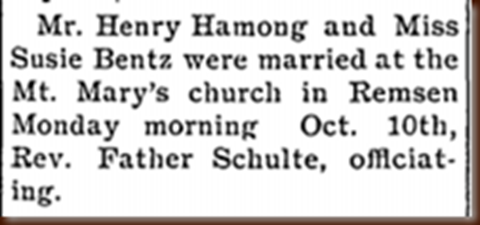
This is the newspaper report of their wedding as found in The Remsen Weekly Bell on 14 October 1897 in the column Local Items:

image_thumb

  • The original wood structure for St. Mary’s Roman Catholic Church was erected in 1884.  German, Luxembourg and Alsace immigrants made up the congregation.  The building was destroyed in June 1885 when tornadoes moved through Plymouth and Cherokee counties.  The second structure was completed late that same year when Father Frank Schulte arrived.  This second structure would be the structure Henry and Susie were married in by Father Schulte.

Some thoughts:
  • My great grandfather’s last name ‘Hamman’ was misspelled as ‘Hamong’ which is why I was unable to find this account when I was searching under Henry’s name but found it when I was searching under Susie’s name.
  • #24 above on the Iowa State marriage record shows one of the witnesses to be Jacob Bentz, Susie’s brother.  Last week when I wrote about Susie’s life I wondered how the couple met?  A fellow Iowa researcher on Facebook found a news item in a local newspaper from 2 years prior to the wedding that showed Henry and Jacob knew each other.  I am now not surprised that he was a Witness for the couple.  I wonder if Lena was a friend of Susie’s?
  • Both Susie and Henry’s families were part of the St. Mary’s family.  Susie’s parent had immigrated from Germany and Henry’s from Luxembourg.

If you have any corrections, additions or stories to share I look forward to hearing them.
Enjoy the journey,
Debby